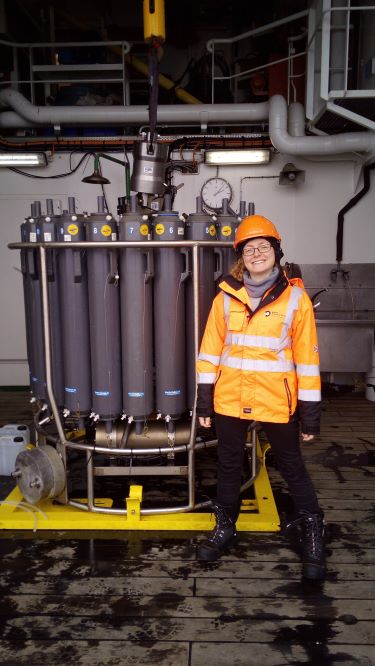
A day on the RRS Discovery…

Guest post by Megan Sørensen

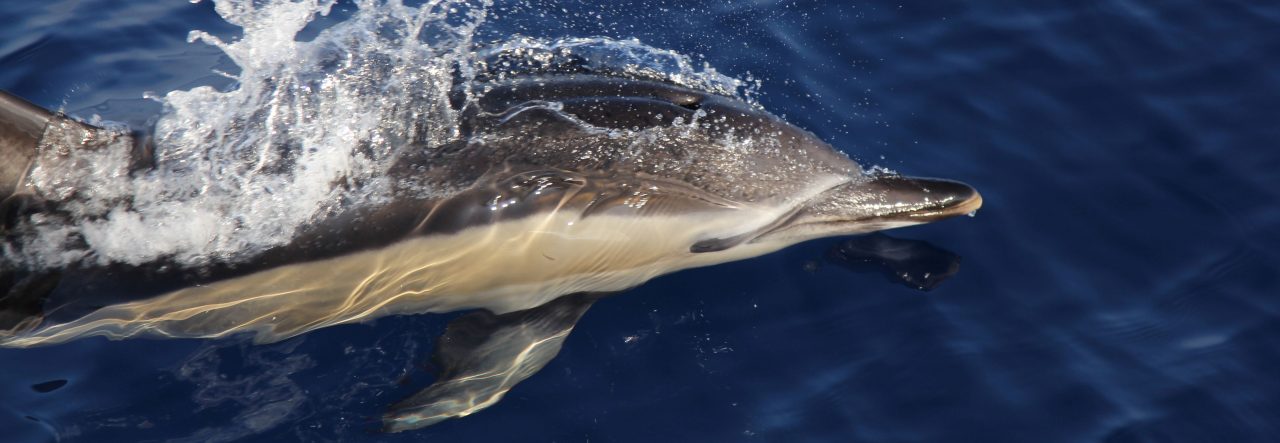
It’s 5am and for the scientists on the early shift it’s time for their day to begin. This includes the scientists who are recording the whales and dolphins they see. They spend the day standing outside on the top deck with their binoculars, cameras and warm layers. Also up at this time are the scientists who have to keep an eye on the overall survey measurements, this means checking a screen that displays everything that the ship passes over and reads all the way to the sea floor, which is over 3km down!

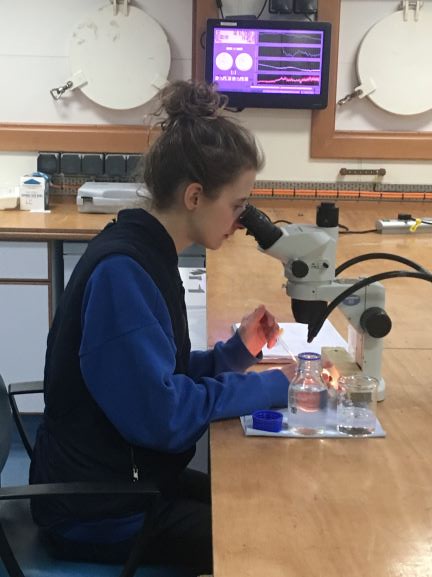
A couple of hours later it’s breakfast, and the scientists on ‘normal’ days are also up and about. These scientists might be running their own experiments in the labs using samples that we’ve already collected. Someone might be on the microscope identifying some of the tiny organisms that live in the sea, and there are probably some people studying krill in the cold lab (set to 2°c so you need all your layers on if you’re working in here).
megan post 2

Then it’s lunch time and the ship starts to get busy as the people from yesterday’s night shift are now awake too. Meal times are important and sometimes they are the only time when everyone comes together. It’s also nice because the crew, scientists, and engineers all sit together. The ship crew keep the entire ship running – from steering the ship, looking after the engines and cooking – and nothing could be done without them.

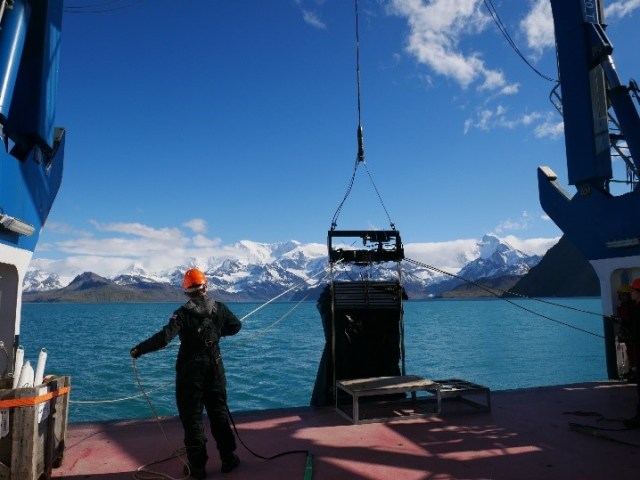
In the late afternoon we see the change over from the day to night shift in the main lab. The people who started early are now finishing, while the night shift has only just got started. For the engineers and scientists on the night shift their main job is using the different types of nets to take samples from the ocean. We do this to monitor how the different species change year to year, and whether this is impacted by variation in the environment or changes in fishing laws. The samples we take are only small and can only take small creatures – mostly krill, jellyfish, and some small fish. The night shift can last till 3 or 4 am and requires a lot of coffee to see it through.

After that the ship is quiet for an hour or two before the early morning shift starts and it all begins all over again.

Megan Sørensen is a PhD student at the University of Sheffield, studying as part of the BBSRC White Rose DTP Program. For more information on her work, please contact @MESSorensen on twitter
Guest Post – Louise Cornwall

Plankton are critical components of the marine ecosystem. There are two groups of plankton, the “phyto” (plant) and “zoo” (animal)-plankton. Both phyto- and zooplankton transfer energy through the food web to larger animals, such as penguins, seals, dolphins and whales. This means it is important we understand how marine plankton respond to future climate change scenarios, as this could have major impact on the whole marine ecosystem. My work concentrates on two components of climate change. The first is the rapid increase in ocean temperature. The second is a process called Ocean Acidification. Increasing levels of carbon dioxide (CO2) in the atmosphere are causing the ocean to become more acidic. These two components, both separately or combined, are proven to be harmful to various marine life.

I study a certain type of zooplanktonic animal called a copepod. Copepods are very small crustaceans, generally less than 2 mm in length. They are the most abundant type of zooplankton in the world’s oceans. My aim is to increase our knowledge of how these tiny, but very important, animals cope under climate change.

o. similis copepodite 4_1

Copepod seen through a microscope… not easy when the floor, desk and everything else are moving in a rough sea!

During the Discovery cruise, I am collecting copepods from plankton net hauls. Once caught, they are stored for at least 12 hours in order to acclimatise. I then exposed them  to different environmental conditions:

  • “normal” – seawater matches natural environment.
  • “high temperature” – seawater temperature is increased.
  • “acidification” – seawater acidity is increased.
  • “high temperature + acidification” – both seawater temperature and acidity are increased.

How copepods, and plankton as a whole, respond to climate change will impact entire marine ecosystems. A better understanding of these responses will increase our ability to predict the future of our oceans.

Louise Cornwall is a Phd Student at Plymouth Marine Laboratory. For more information on her work, email loco@pml.ac.uk

Guest Post – Alysa Hulbert

Growing up in London I never imagined that I’d be spending 40 days living and working in the Southern Ocean on the Royal Research Ship Discovery. And yet I’m typing this ten days into my voyage; swaying side-to-side, hearing waves crashing, and looking out my porthole at fog hanging over the water. So how on earth did I end up here? And if that sounds exciting, how can you end up doing something just as adventurous?

I’ve always loved nature, and so Science and Geography were my favourite subjects at school. I decided to study Biology at University, doing a very cool course involving field trips to coastal Wales, the volcanic island of Tenerife, the forests of Canada, and the Bornean jungle. It was both difficult and fascinating, but I survived and graduated. After a bit of volunteering at a local nature reserve, and an exciting job working in the labs in the Veterinary Department at London Zoo, last year I achieved my dream of working for the British Antarctic Survey. I took a chance and applied for something a little different; working in Information Services. This was a career choice I was never told about at school, but as someone who likes everything in order, it suits me very well. And it’s resulted in me ending up on this amazing trip!

On board there’s 24 scientists and 24 crew, and then there’s me – the Data Manager. Every scientist has their own research project, and at the end of the voyage all the data that’s been collected is saved in the Data Centre where I work back at British Antarctic Survey. This is held for ever, and is open for anyone around the world to come and use for their own research. My job is to make sure the data is organised in a logical way, and is labelled in detail so it can be searched for easily and has all the explanatory information needed for someone else to re-use it in future. This information is called ‘Metadata’, and tells you what the dataset holds, when, where and how it was collected, and who collected it. To do this properly I need to know what’s going on, so one advantage of my job is that I get to talk to all the scientists to find out what they’re working on, and hopefully get involved!

So far I’ve helped unload all the cargo onto the ship, and tied lab equipment down so it doesn’t move and get damaged in rough seas. I’ve sorted through strange sea creatures freshly caught from the water, and looked at them under the microscope. And then there’s the added bonus of ocean travel in this part of the world; I’ve seen icebergs and glaciers, albatrosses, seals, whales and penguins. I’ve been to places most people will never visit in their lives, and seen sights that only tourists spending thousands of pounds might get to see.

But the best bit is that my hard work supports the science that underpins the fight against climate change. I’m supporting studies into what plastic waste is doing to sea life and the research that ensures that people don’t fish so much that it damages the ocean ecosystem. I feel like the luckiest person in the world.

Alysa Hulbert is Data Manager at British Antarctic Survey. This is her first research cruise.  For more information on BAS, see  https://www.bas.ac.uk/data/uk-pdc/